Aligning People, Processes, Governance, and Technology for Meaningful Change
Aligning People, Processes, Governance, and Technology for Meaningful Change
Moving AI from experimentation to sustained use, with governance, workforce readiness, and human oversight built in.
Digital transformation and AI adoption do not succeed through technology alone.
Successful adoption happens when organizations align leadership, workforce readiness, governance, knowledge, and operational realities around a shared purpose.
Alicia M. Morgan is a Digital Transformation, AI Adoption, and Workforce Enablement Leader who helps organizations navigate change through stakeholder alignment, knowledge modernization, human-centered leadership, and responsible technology adoption.
Her work spans workforce development, higher education, nonprofits, museums, enterprise transformation, and AI enablement. Across each environment, the focus remains the same: helping organizations navigate change by aligning people, processes, governance, and technology. She is a 2019 Dallas Business Journal Women In Technology Awards Honoree.

Scaling programs is part of her story from her previous executive role as Vice President of Education and Programs.
Alicia M. Morgan at a Glance
- Digital Transformation & AI Adoption Leader | PMP ®
- TEDx Plano speaker
- PMI Global Webinar Presenter (21,000+ views)
- Executive Leader and Workforce Strategist
- AI Coach and Human-in-the-Loop Facilitator
- Experience spanning Aerospace, Higher Education, Nonprofits, Museums, and Workforce Development
- Speaker, Facilitator, and Advisor on AI Adoption, Change Leadership, and Organizational Transformation
Why This Matters
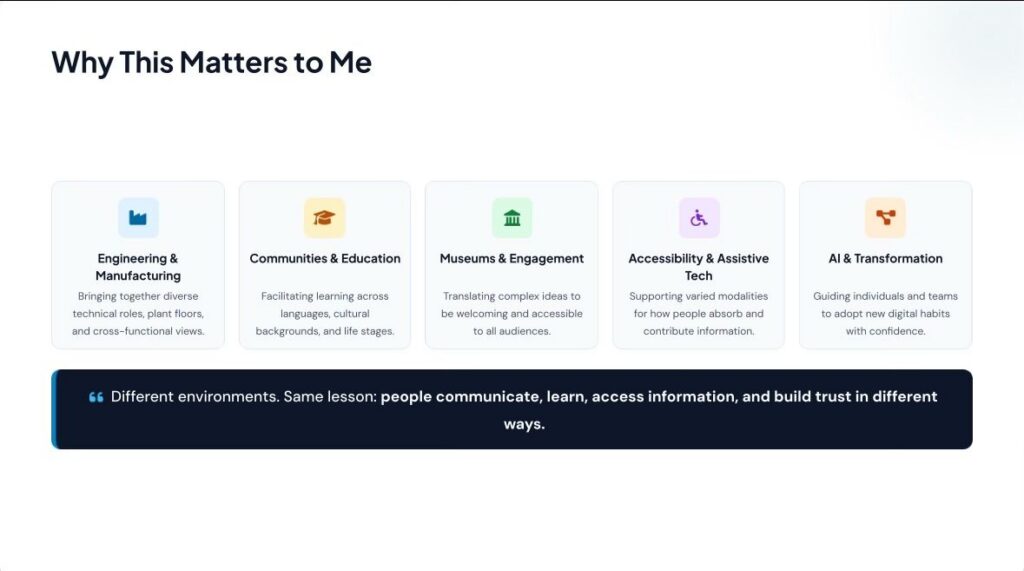
The principles that guide her approach to digital transformation, AI adoption, workforce enablement, and human-centered change.
Technology has always been most meaningful to Alicia when it helps people learn, connect, and access opportunities that might otherwise be out of reach.
Throughout her career in workforce development, higher education, museums, nonprofits, and enterprise environments, she has seen the same lesson repeated again and again: lasting transformation happens when people feel informed, included, and supported through change.
Building on her engineering background, Alicia later served as Vice President of Education & Programs at Frontiers of Flight Museum, an aviation and aerospace museum in Dallas, where she led initiatives focused on education, workforce development, and community engagement.
Whether helping students navigate career pathways, preserving institutional knowledge, improving access to information, or guiding conversations about emerging technologies, her work has consistently centered on helping people adapt, grow, and succeed in a changing world.
AI presents tremendous opportunities, but successful adoption is about more than technology. It requires trust, clear communication, responsible governance, and a commitment to keeping people at the center of the process.
That’s why her approach aligns people, processes, governance, and technology. When organizations start with the needs of their workforce and the communities they serve, technology becomes a tool for meaningful and sustainable change.
One lesson has remained consistent throughout her career: people are far more likely to embrace change when they understand why it matters and how it connects to their goals. Whether the conversation involves workforce development, knowledge modernization, or AI adoption, creating that understanding is often the first step toward lasting results.
Executive Capability Framework
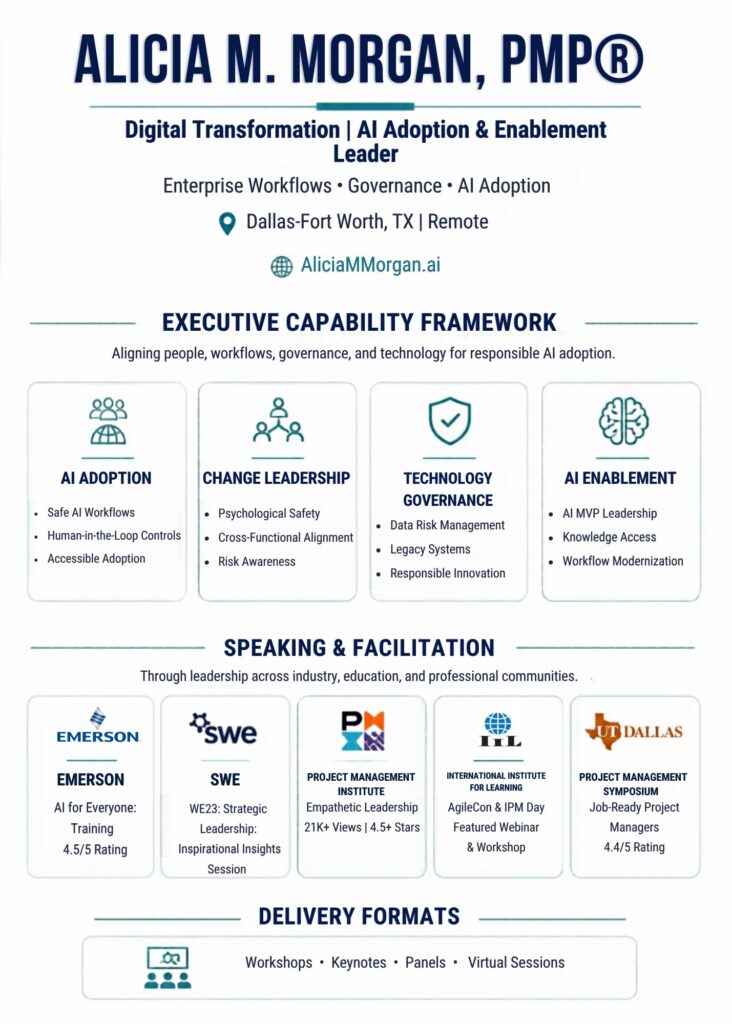
Areas of Expertise
- Digital Transformation
- AI Adoption & Enablement
- Workforce Readiness
- Change Leadership
- Technology Governance
- Human-in-the-Loop Leadership
- Knowledge Modernization
- Executive Facilitation
- Stakeholder Alignment
- Innovation Strategy
Alicia’s Perspective
Throughout her career, Alicia has worked across diverse organizations, sectors, and stakeholder communities.
While industries differ, she has noticed the same challenges surface during periods of change. People want clarity. Leaders want confidence that investments will create value. Organizations want to move forward without losing the knowledge, relationships, and expertise that helped them succeed in the first place. Those experiences shaped her approach to digital transformation and AI adoption. Rather than starting with technology, she focuses on understanding goals, stakeholders, existing knowledge, and organizational realities. The technology may change, but successful adoption often depends on trust, communication, and a shared understanding of why change matters.
How Alicia approaches AI Adoption
Organizations typically experience AI adoption across multiple levels of maturity:
- Individual Enablement: Helping employees integrate AI into everyday work and decision-making.
- Use-Case Adoption: Applying AI to solve specific business challenges and improve workflows.
- Functional Transformation: Evolving how teams and departments operate through new processes, governance, and new ways of working.
- Enterprise Transformation: Aligning strategy, workforce readiness, governance, technology, and business value across the organization.
While each level matters, much of her work focuses on helping organizations move from isolated experimentation to sustainable adoption by aligning people, processes, governance, and measurable business outcomes.
The Evolution of Alicia’s Work
Dallas College | Workforce Discovery & Digital Transformation
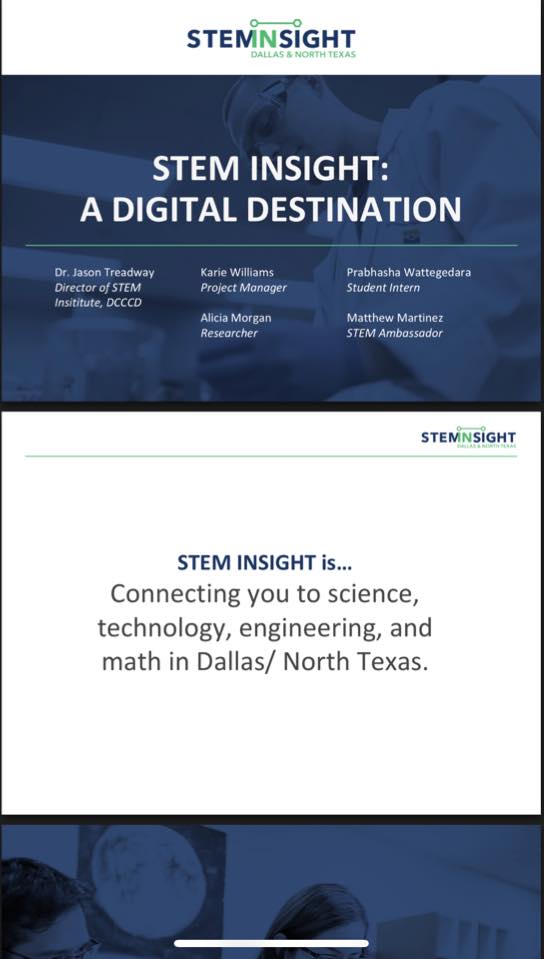
STEM Insight brought together workforce research, stakeholder engagement, and digital transformation to strengthen STEM education and career pathways across North Texas.
STEM Insight brought together workforce research, stakeholder engagement, and digital transformation to strengthen STEM education and career pathways across North Texas.
As Senior Researcher and Vertical Team Facilitator for the Texas Regional STEM Degree Accelerator (TRSDA), a three-year initiative funded by Educate Texas, Alicia helped bring together K-12 educators, higher education institutions, workforce leaders, and employers to strengthen STEM pathways and better align education with regional workforce needs.
The initiative focused on improving student engagement, retention, and success by connecting learning experiences with real-world workforce expectations. Through research, facilitation, and stakeholder collaboration, the team’s work identified critical skills gaps, including communication, collaboration, and career awareness, and informed strategies across mathematics, computer science, information technology, physics, and engineering.
Regional Workforce Collaboration
The initiative brought together educators, workforce leaders, higher education institutions, and employers to identify emerging workforce needs and strengthen connections between learning pathways and career opportunities. Through facilitated discussions, stakeholder research, and cross-sector collaboration, the team translated workforce insights into practical strategies designed to improve student success, workforce readiness, and long-term regional talent development.
Leadership & Contributions
- Facilitated stakeholder engagement and discovery
- Conducted workforce and user research
- Led requirements gathering efforts
- Bridged educational, workforce, and technical stakeholders
- Translated research insights into digital experiences
- Supported alignment between education pathways and workforce development priorities
Outcomes
Research findings informed the development of STEM Insight, a digital workforce platform designed to connect students, educators, parents, employers, and workforce organizations through:
- Career pathways
- Educational pathways
- Workforce dashboards
- Professional networking forums
- Events and resources
The platform evolved through multiple phases, expanding its ability to connect educational pathways, workforce insights, career exploration resources, and employer engagement opportunities across the region.
What It Reinforced
Successful transformation starts with understanding the people and systems a solution serves.
Workforce research, stakeholder discovery, and cross-sector collaboration provide the foundation for solutions that create long-term educational and economic impact.
Featured Resource: STEM Insight Workforce Platform
The GEMS Camp & Dallas Civil Rights Museum AI Adoption
Knowledge Modernization Through AI
As AI Coach, Human-in-the-Loop Lead, and subject matter expert, Alicia supported a 12-week initiative involving The GEMS Camp and the Dallas Civil Rights Museum. Funded by the American Association of University Women (AAUW), the initiative focused on improving accessibility, preserving institutional knowledge, and exploring responsible AI-enabled innovation.
Working alongside high school students serving as AI consultants, the team used human-centered discovery practices to better understand visitor needs, accessibility challenges, and opportunities to modernize how the museum preserves, accesses, and shares historical knowledge and educational resources.
Students explored responsible AI practices using Google Workspace, Gemini, Gemini Notebook (formerly NotebookLM), ChatGPT, Claude, HeyGen, Squarespace, and related AI-enabled workflows as they progressed from stakeholder discovery and research to solution development and client presentation.
“As an SME AI Coach, Alicia led one of three intern teams in developing a legacy archive chatbot to support the Dallas Civil Rights Museum. Alicia brought structure from day one, organizing the team, establishing clear roles and milestones, and maintaining progress throughout the project. What stood out most was her empathy. Alicia combined practical AI fluency with a human-centered approach, building trust and ensuring the final product reflected stakeholder needs.”
— Saki Milton, Ph.D., M.B.A., Founder & Executive Director, The GEMS Camp (on the AI Good for the Neighborhood Initiative)
Alicia’s Role
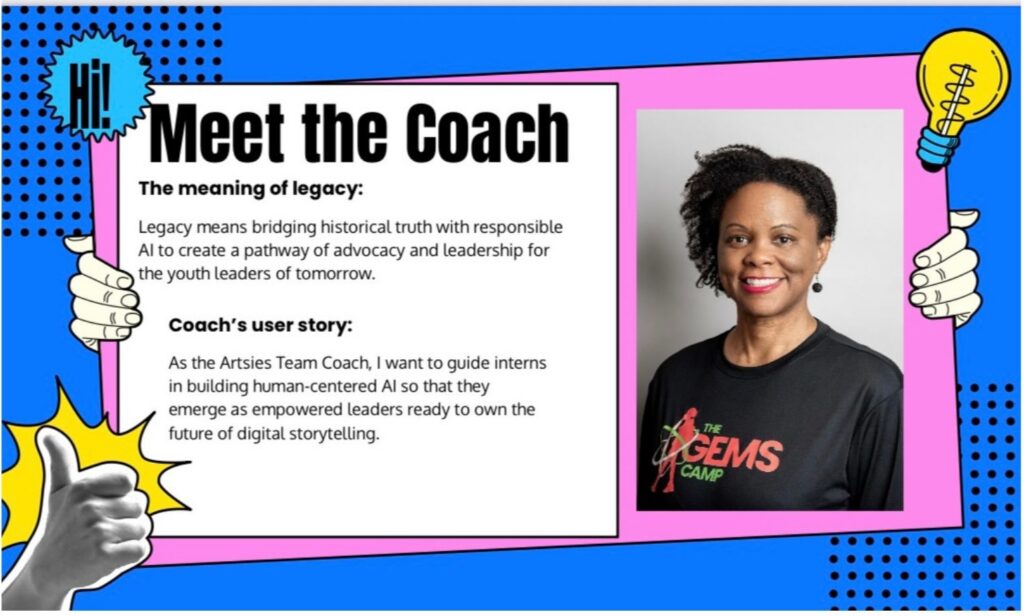
- Guided stakeholder engagement and workflow design
- Supported development of an AI-powered knowledge solution
- Integrated governance and validation practices
- Applied human-in-the-loop principles to strengthen trust and accountability
Challenge
- Improve accessibility to museum content and educational resources
- Preserve institutional knowledge and historical artifacts
- Support long-term knowledge stewardship and organizational sustainability
- Explore responsible AI-enabled innovation in a community setting
Stakeholder Discovery & Insights
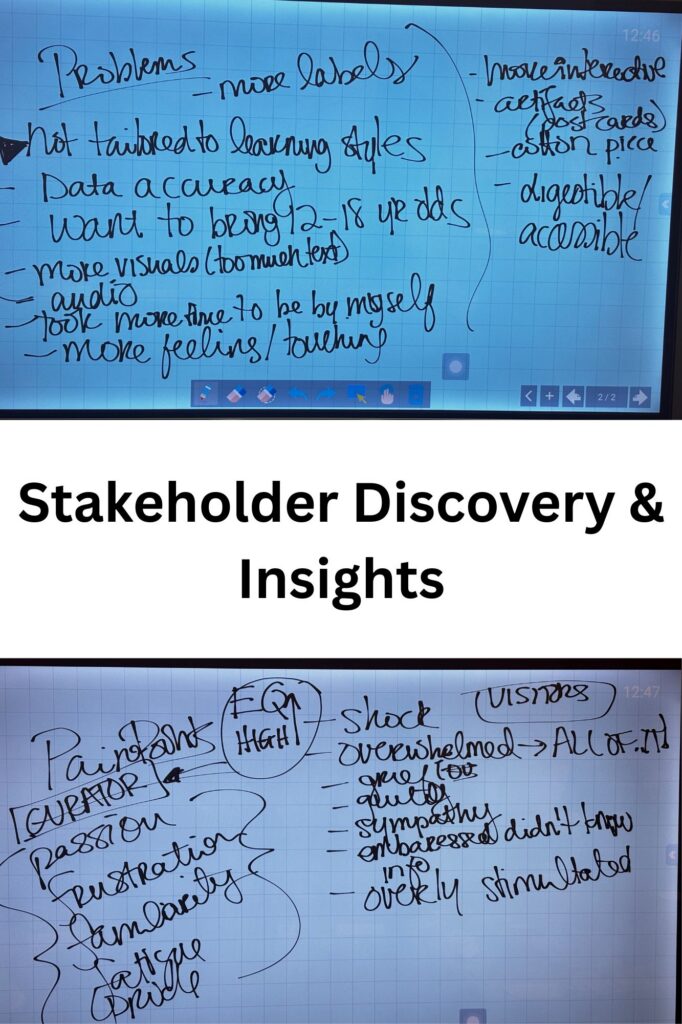
Stakeholder discovery sessions identified visitor pain points, accessibility challenges, learning preferences, and opportunities to improve how museum content was experienced, preserved, and shared.
Leadership & Contributions
- Served as the Artsies Team AI Coach and Human-in-the-Loop Lead throughout the initiative
- Coached high school students serving as AI consultants through discovery, research, solution development, and implementation
- Guided stakeholder engagement, workshop facilitation, and workflow design
- Supported development of AI-powered knowledge solutions for museum visitors and staff
- Integrated governance, accessibility, validation, and documentation practices
- Applied human-in-the-loop principles to strengthen trust, accountability, and responsible AI adoption
Outcomes
- Contributed to an accessibility-focused website that expanded access to museum resources and community engagement.
- Established governance resources, accessibility guidance, FAQs, and documentation standards for responsible AI adoption.
- Digitized 100% of the museum’s historical artifacts and knowledge assets, creating a centralized resource for discovery, docent training, and future growth.
- Developed of an AI-powered legacy knowledge tool for docent training, tour planning, knowledge discovery, and collection growth. The tool remains in use internally at the museum.
Project Resources
🔗 The Dallas Civil Rights Museum: Visit the Dallas Civil Rights Museum website
📄 What AI Coaching Really Means (IIL Blog): Reflections on human-centered AI adoption, governance, stakeholder engagement, and lessons learned from the initiative. Read “What AI Coaching Really Means”
📄 PM World Journal Case Study: Cross-Industry Scenario Planning Lessons: Insights for Project Managers in the AI Era (August 2026). Read the case study
🏆 AAUW Grant Announcement (The GEMS Camp): View the AAUW grant announcement
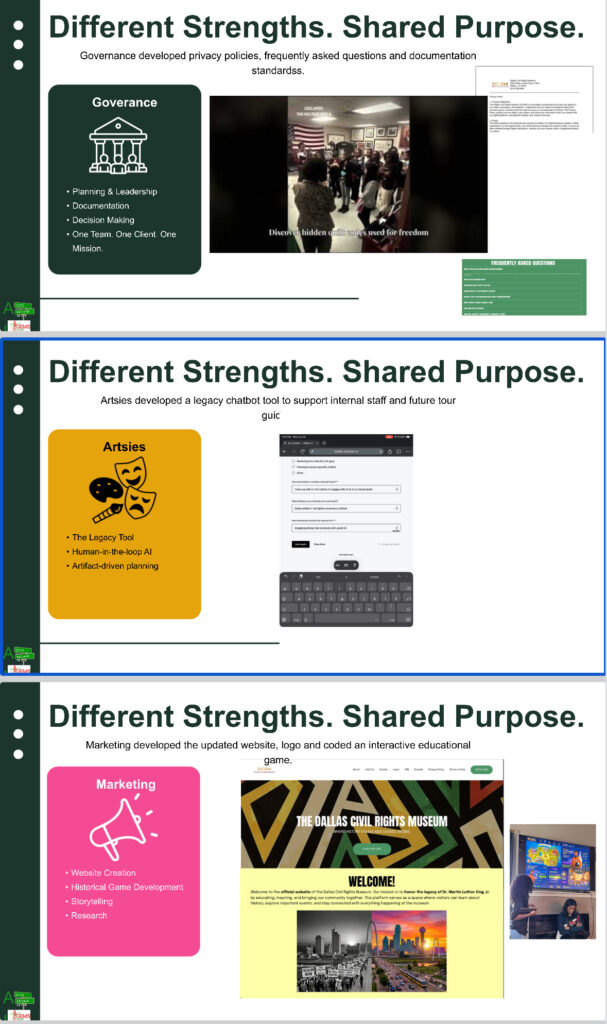
Cross-functional teams delivered governance resources, an AI-powered legacy knowledge tool, and an accessibility-focused website to support knowledge preservation, visitor engagement, and long-term organizational growth.
What It Reinforced
Successful AI adoption begins long before technology implementation. Meaningful transformation requires stakeholder engagement, accessibility, governance, workforce readiness, and intentional knowledge preservation.
By combining human-centered discovery, responsible AI practices, digital literacy, and community-based learning, this initiative demonstrated how technology can strengthen both organizational capability and future leadership development.
Technology can make information more accessible, but its greatest value comes from preserving the experiences, context, and expertise that give knowledge meaning.
Emerson | AI Adoption for Everyone
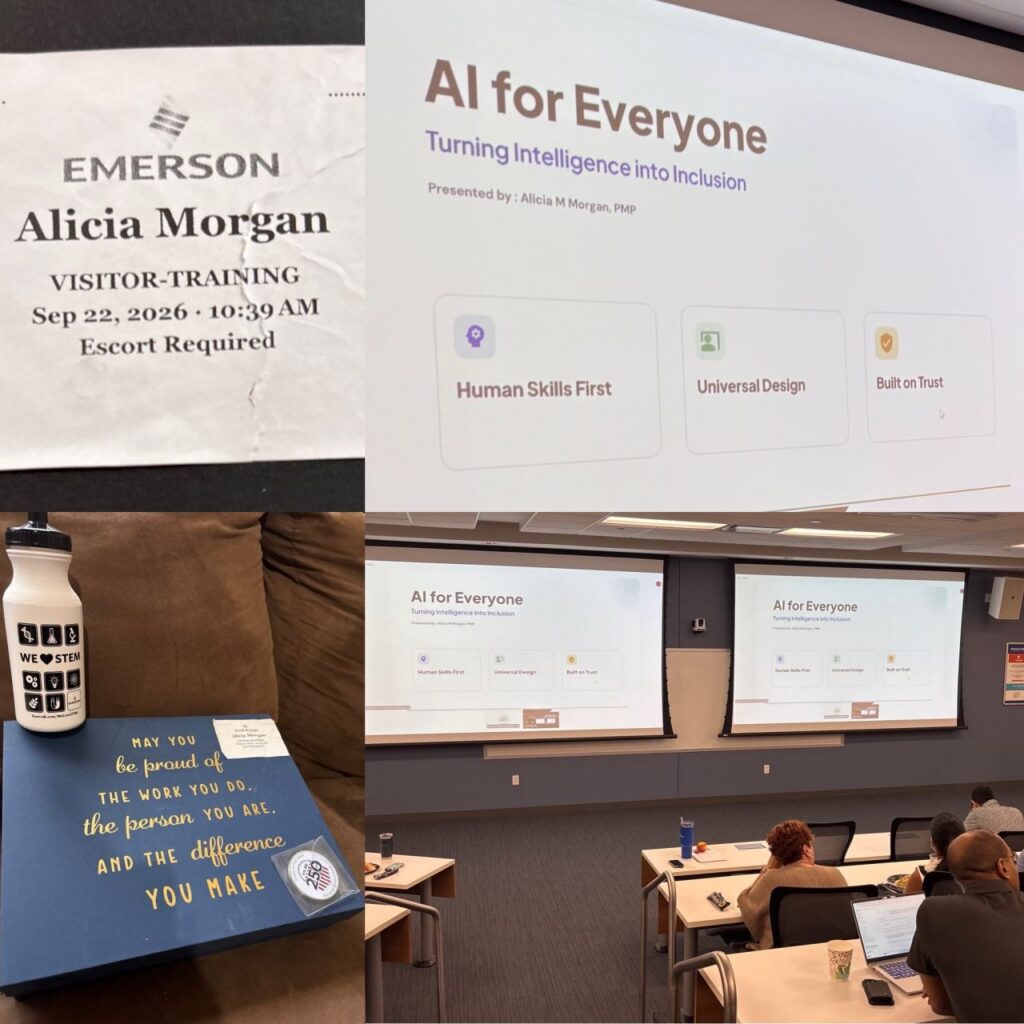
AI for Everyone workshop at Emerson, McKinney, Texas
Audience Impact & Workshop Outcomes
4.5/5 Average Session Rating (post-workshop survey, 2026)
Key Themes & Discussion Outcomes
Human-Centered AI Adoption
Participants explored how communication, context, and human judgment influence effective AI use. Discussions emphasized that successful adoption depends not only on tools, but also on building understanding, fostering trust, and aligning technology with organizational goals and workforce needs.
Accessibility & Inclusive Design
The workshop highlighted accessibility as a strategic consideration for communication, knowledge sharing, and AI-enabled experiences. Participants examined how inclusive design practices can improve engagement, usability, and participation across diverse audiences.
Trust, Governance & Responsible Use
Participants discussed practical approaches for evaluating AI outputs, grounding decisions in reliable information, protecting privacy, and applying AI responsibly within professional environments. Conversations reinforced the connection between trust, governance, and sustainable adoption.
Inclusive Engagement & Stakeholder Alignment
Developed in collaboration with Employee Resource Group (ERG) leaders, the session was intentionally tailored to engage both in-person and virtual participants through discussion, reflection, and shared learning. The workshop created opportunities for business teams and employee communities to explore AI adoption together while reinforcing inclusion, accessibility, and organizational alignment across diverse stakeholder groups.
Participant Outcomes
Attendees reported gaining:
- Greater confidence in evaluating AI-generated responses and recommendations
- Practical approaches for applying AI best practices within everyday workflows
- Increased awareness of accessibility and disability-inclusive considerations in presentations, communications, and AI-enabled experiences
- New strategies for leveraging AI to improve presentation development, feedback gathering, and communication effectiveness
- A deeper understanding of how trust, communication, and human-centered practices support successful AI adoption and organizational outcomes
Participant Feedback
“It was a great presentation, very engaging and informative. I learned several useful tips on how to leverage AI features for practicing presentations and receiving feedback to improve delivery and effectiveness.” Emerson Workshop Participant
“The session provided practical guidance for ensuring AI is used thoughtfully and in alignment with best practices within professional environments.” Emerson Workshop Participant
“The session was engaging, interactive, and thought-provoking. It brought together business teams and ERG leaders for meaningful conversations about AI, accessibility, and inclusion in the workplace.” Emerson Leadership Team
🎥 Watch the Presentation
Human-Centered Digital Transformation & AI Adoption
- How will employees engage with AI?
- Where should human oversight remain?
- How do we build trust in AI-enabled workflows?
- How do we prepare teams for change?
- How do we align innovation with organizational goals?
- How do we preserve accountability while improving efficiency?
Human-in-the-loop leadership ensures that AI enhances human expertise while preserving judgment, responsibility, and organizational values.
Indicators of Organizational Readiness
These are the signals I assess before recommending any tools. Organizations are better positioned for success when:
✅ Leadership and stakeholders share a common vision
✅ Teams understand why AI is being introduced
✅ Employees are informed and included in the process
✅ Human-in-the-loop oversight exists where appropriate
✅ Governance and accountability structures are established
✅ Knowledge assets are accessible and organized
✅ AI initiatives support business and mission objectives
✅ Teams demonstrate trust, engagement, and readiness for change
Speaking Impact & Audience Reach
Selected Speaking Engagements, 2017-Present
- TEDx Plano
- Project Management Institute (PMI) Webinar
- Emerson
- Society of Women Engineers (SWE), WE23 Inspirational Insights Session
- Executive Women in Texas Government (EWTG) Conference, IBM Sponsored Presentation
- International Institute for Learning (IIL), AgileCon and IPM Day
- UT Dallas Project Management Symposium
- Project Bites Events
Audience Reach
- 21,000+ PMI on-demand webinar views
- 4.6/5 viewer ratings (PMI on-demand webinar)
- 500+ participants, AgileCon 2024 (reported by International Institute for Learning)
- 481 delegates across 14 PMI chapters, Project Bites professional development training events
- 81% “Awesome” or “Very Good”, PMI chapter audience evaluation, Project Bites event
Audience Feedback
“Insightful, practical, and engaging. Alicia bridges technical depth with business strategy while keeping the human element at the center.” – AgileCon 2024 attendee (via IIL evaluation)
“It was great to hear the different ways you have navigated getting reluctant stakeholders on board. Parking lots are something I often use to help keep our groups on track and farm for future projects.” – PMP certified viewer, PMI on-demand webinar comment (March 2024)
“The personal story brought the presentation to life.” – SWE WE23 attendee survey
Organizations & Communities
Organizations where I have contributed through leadership, facilitation, speaking, research, coaching, and transformation initiatives:
- Raytheon
- Dallas College
- Frontiers of Flight Museum
- The GEMS Camp
- Dallas Civil Rights Museum
- Emerson
- Project Management Institute (PMI)
- Society of Women Engineers (SWE)
- International Institute for Learning (IIL)
- UT Dallas
- TEDx Plano
Frequently Asked Questions
What is digital transformation?
Digital transformation is the process of improving organizational outcomes through changes to technology, workforce capabilities, processes, and operating models.
What is AI adoption?
AI adoption is the integration of AI technologies into workflows, decision-making, and organizational practices in ways that create sustainable business value.
Why do AI initiatives struggle?
Many organizations focus on technology before addressing stakeholder alignment, workforce readiness, governance, and organizational culture.
What is human-in-the-loop leadership?
Human-in-the-loop leadership maintains human accountability, oversight, and decision-making while leveraging AI to enhance productivity and outcomes.
Who benefits from this approach?
Organizations seeking to improve workforce readiness, digital transformation outcomes, organizational alignment, knowledge management, and responsible AI adoption.
Let’s Connect
Whether you’re leading a digital transformation initiative, preparing your workforce for AI, modernizing knowledge systems, or planning a leadership event, I help organizations align people, processes, governance, and technology for sustainable change.
Contact Alicia Morgan regarding speaking, facilitation, advisory, transformation, and AI adoption engagements. Alicia is also open to discussing full-time and fractional leadership opportunities in digital transformation, AI adoption, workforce enablement, and organizational change.